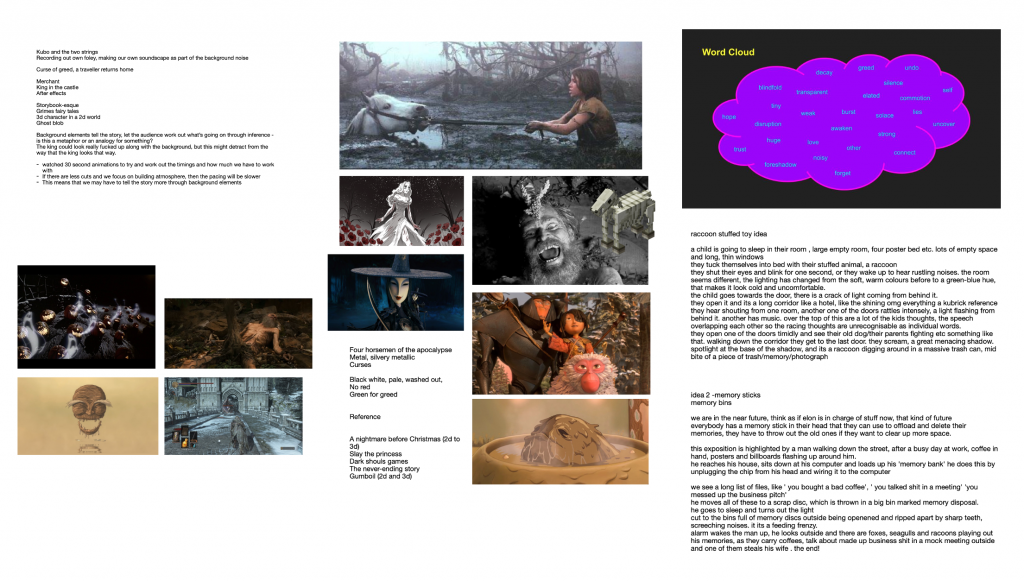
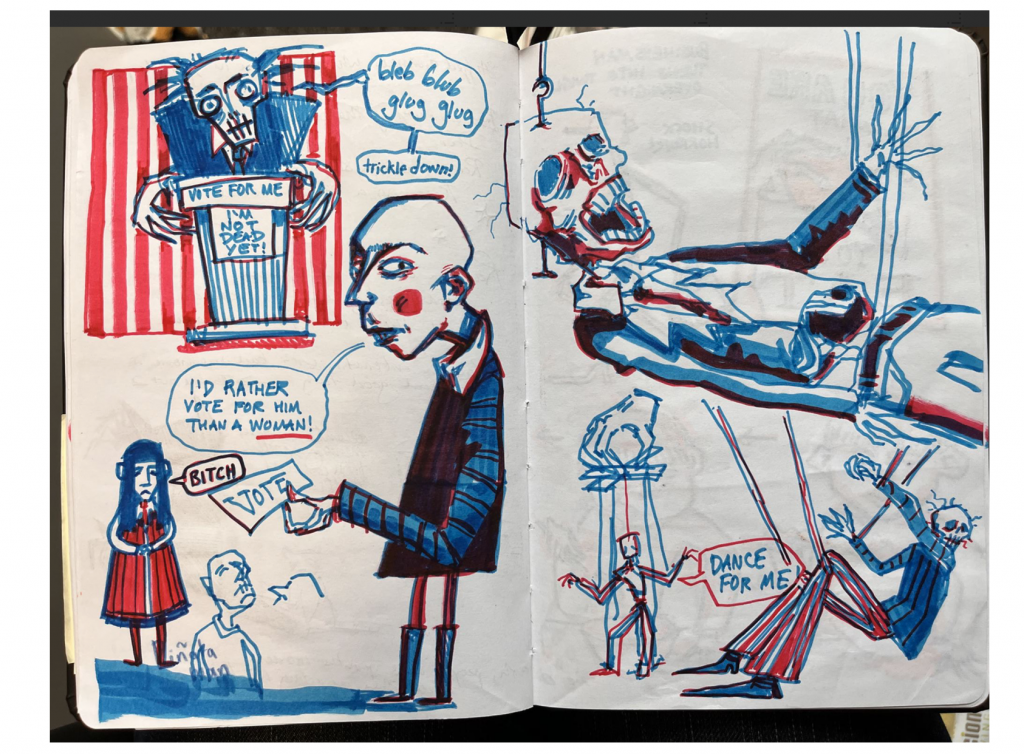
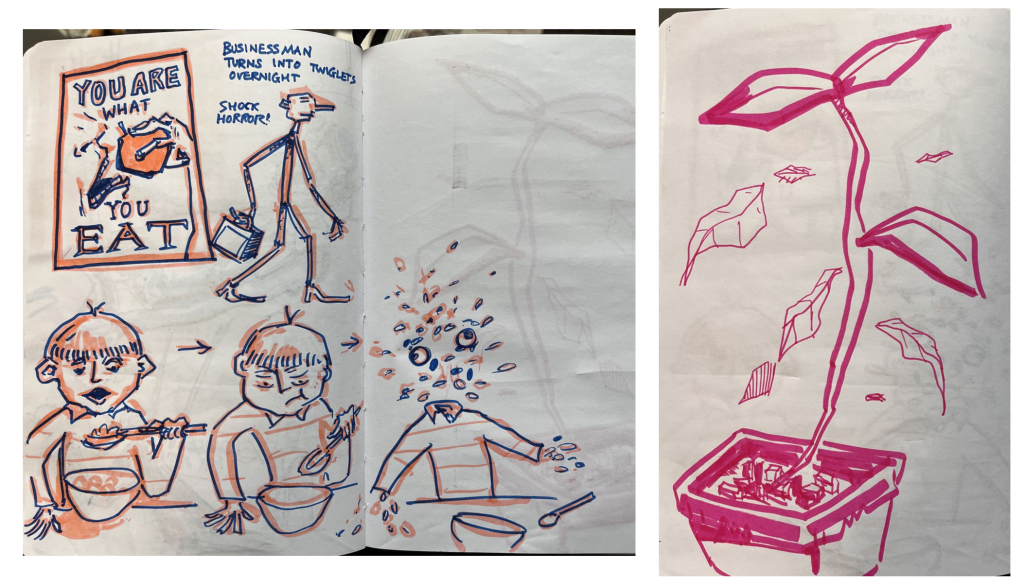
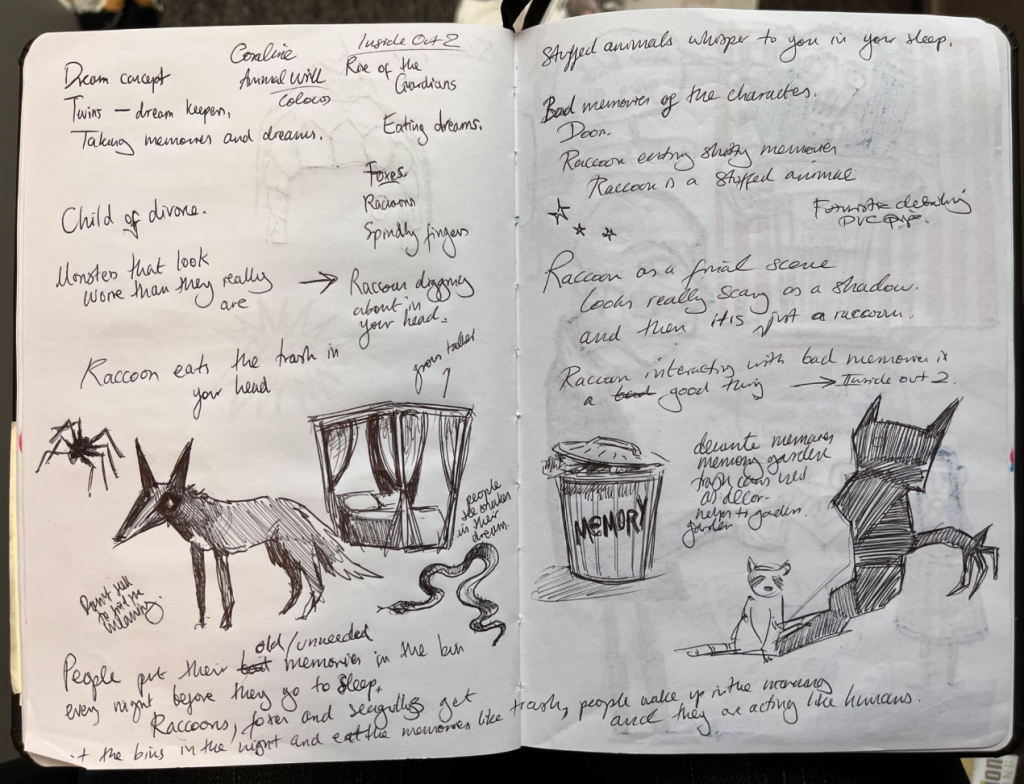
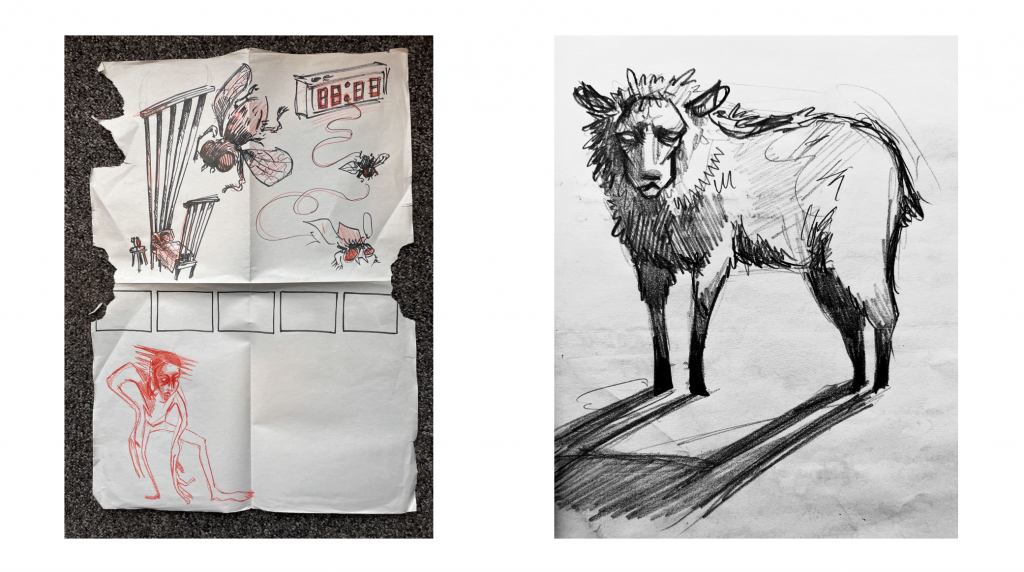
This was our second idea – using animals as a placeholder for human ideas (eg- creature comforts).
We didn’t end up using this, although the animals did feature heavily in our next draft, as we came up with the idea of raccoons living in your head and digging through your memories at the end of the day as a way of processing events. However, this concept was complicated, and although I liked the absurdity, it was very difficult to create a 30 second story about this.
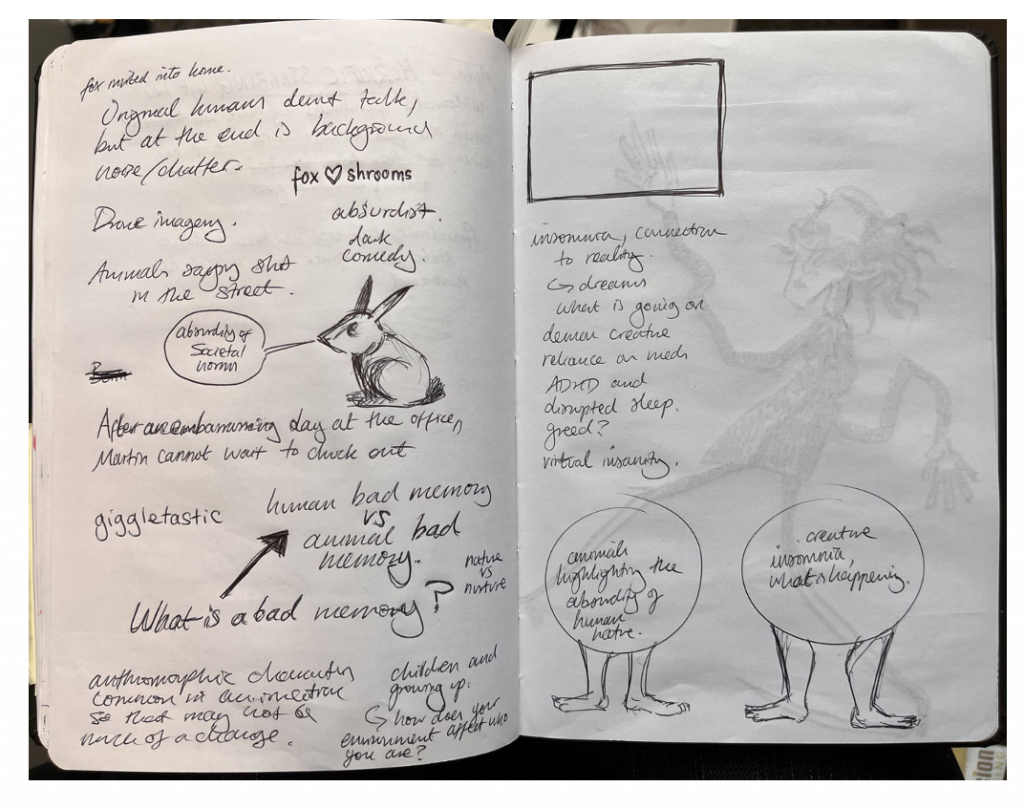
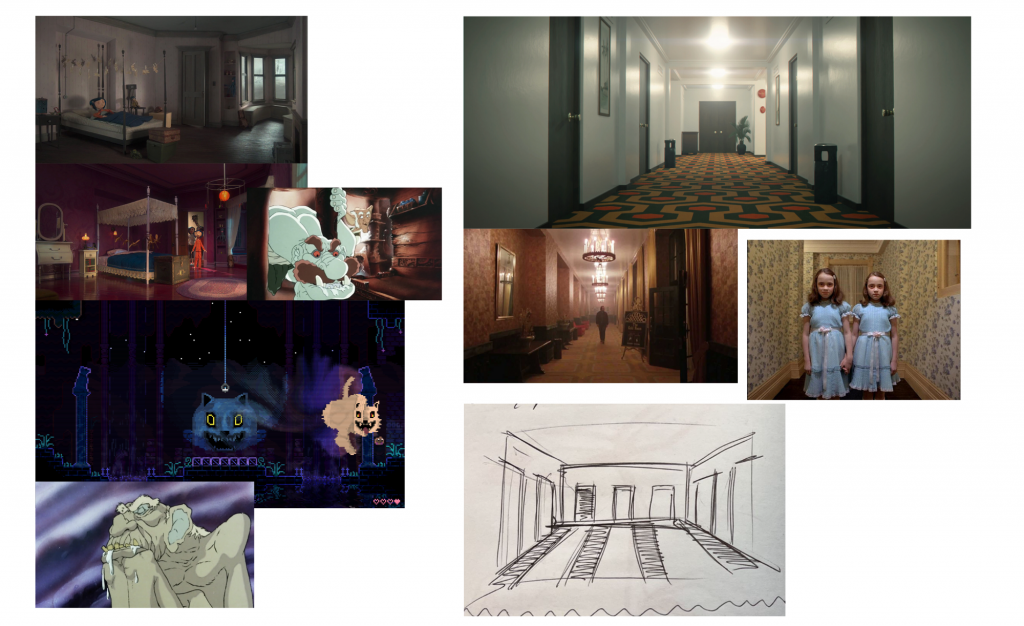
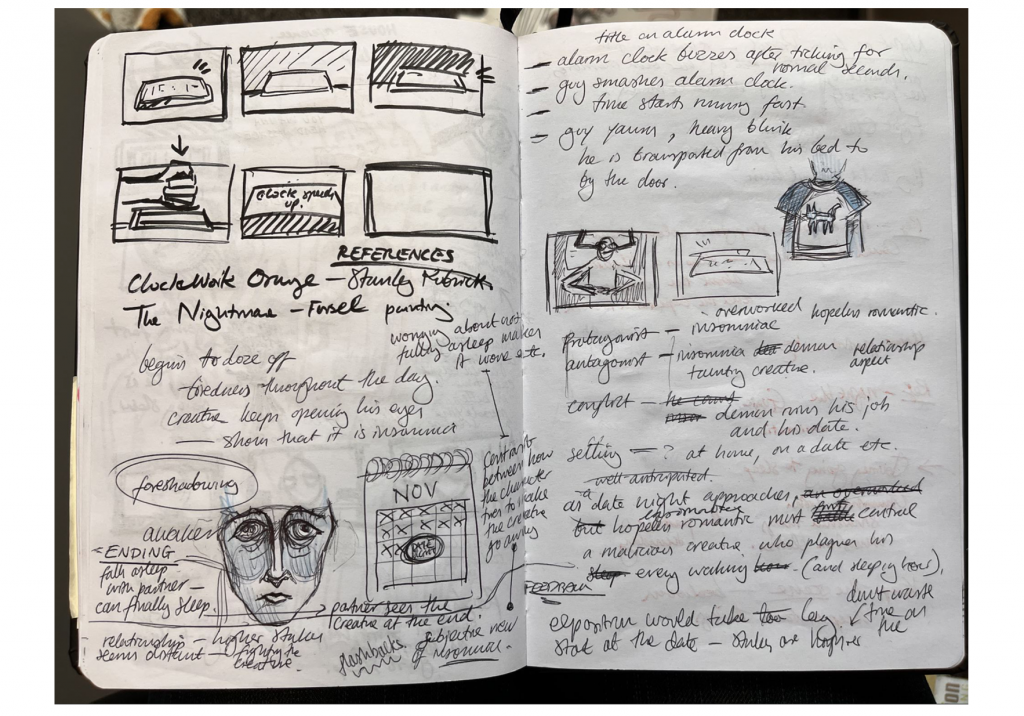
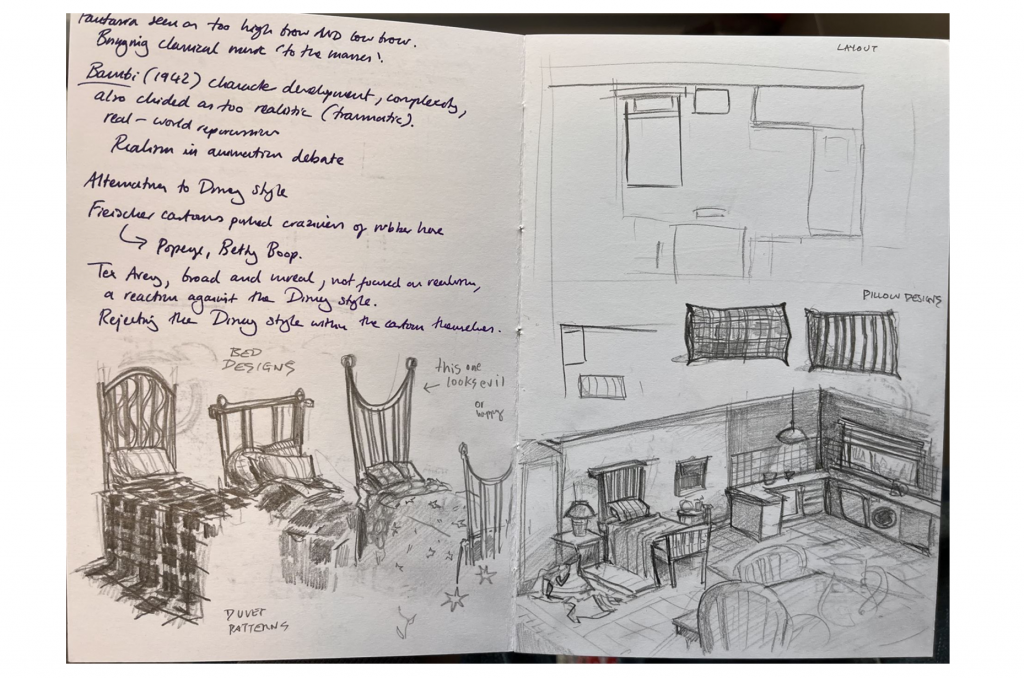
For film inspiration ideas, we focused on liminal spaces within film and dream sequences. Examples we looked at were Coraline, The BFG and The Shining. We started to refine the points of our story, as we had decided to focus the film on the story of an insomniac wandering through a world without sense, the world distorting around them as they become more sleep-deprived.
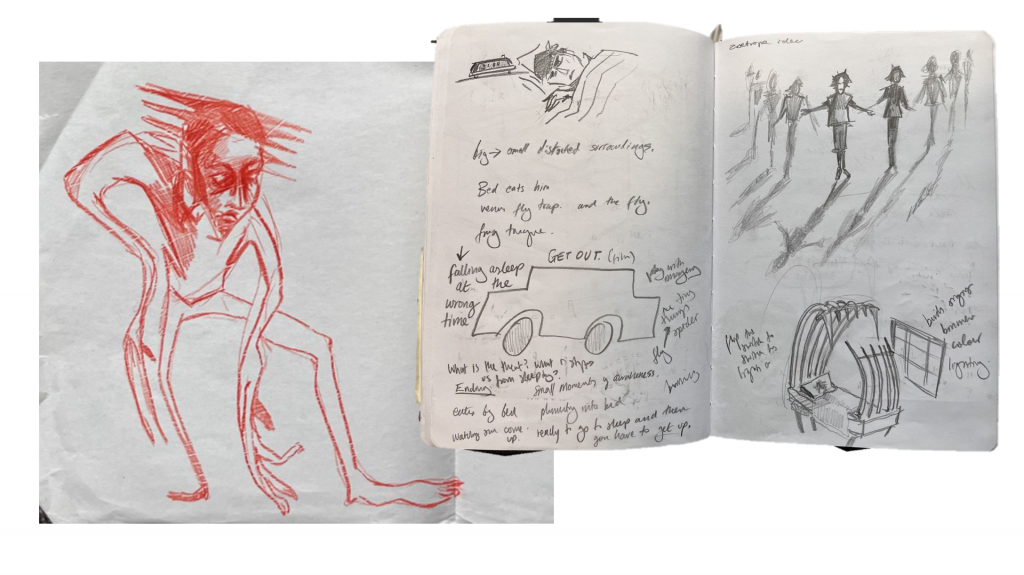
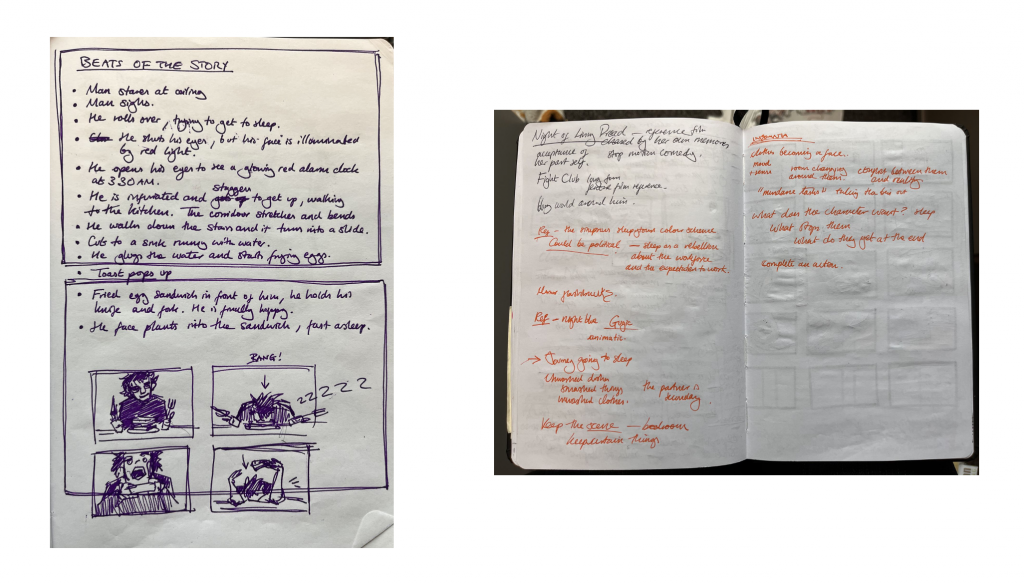
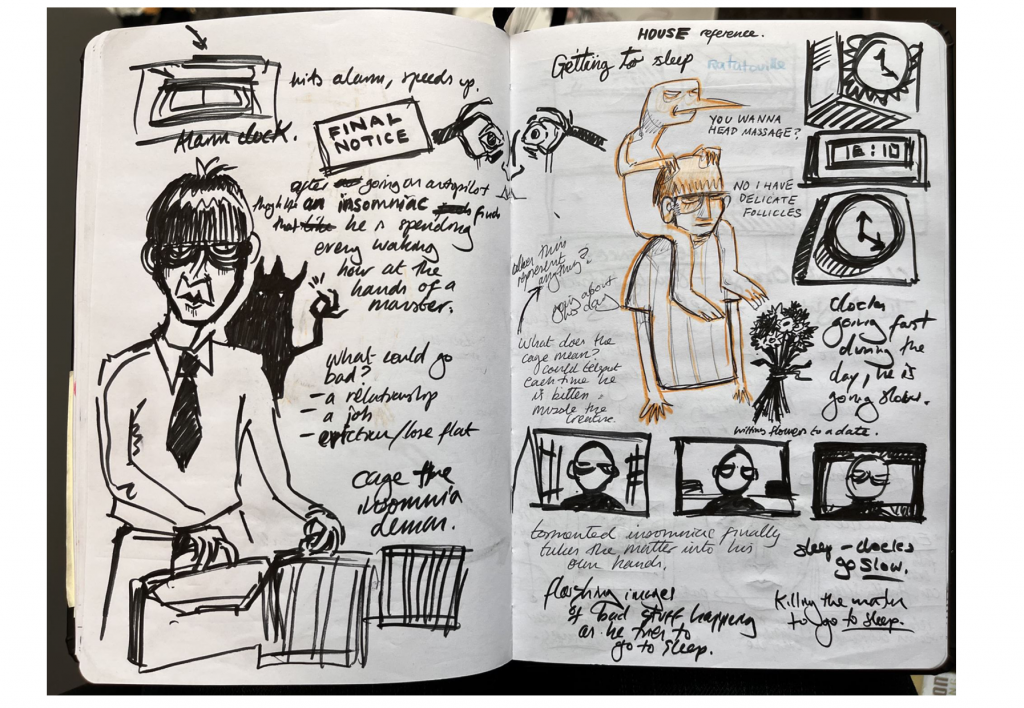
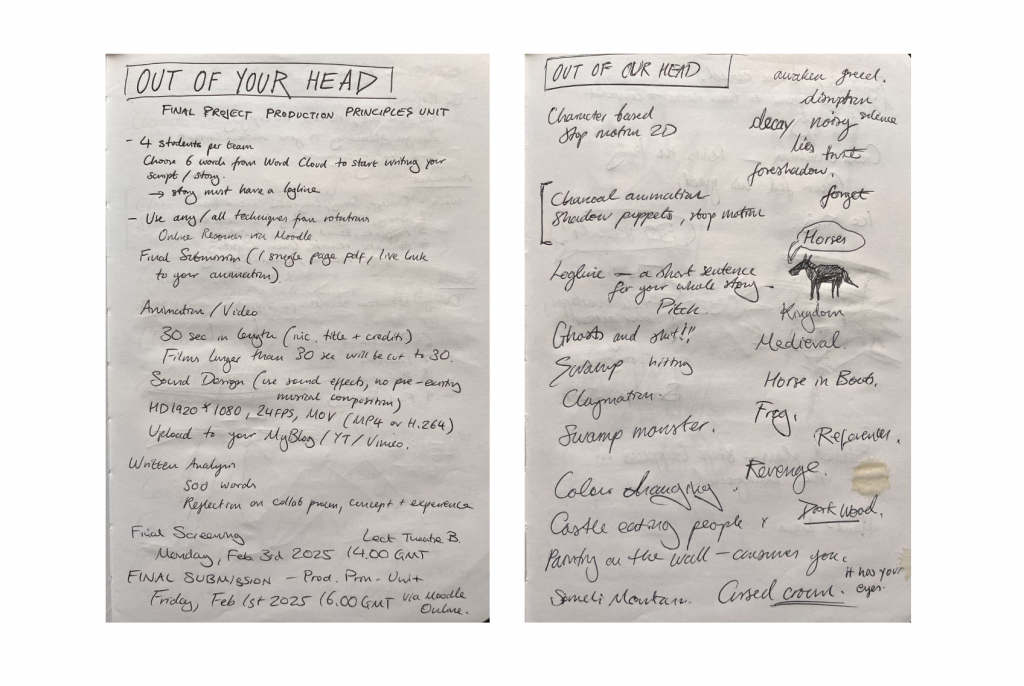
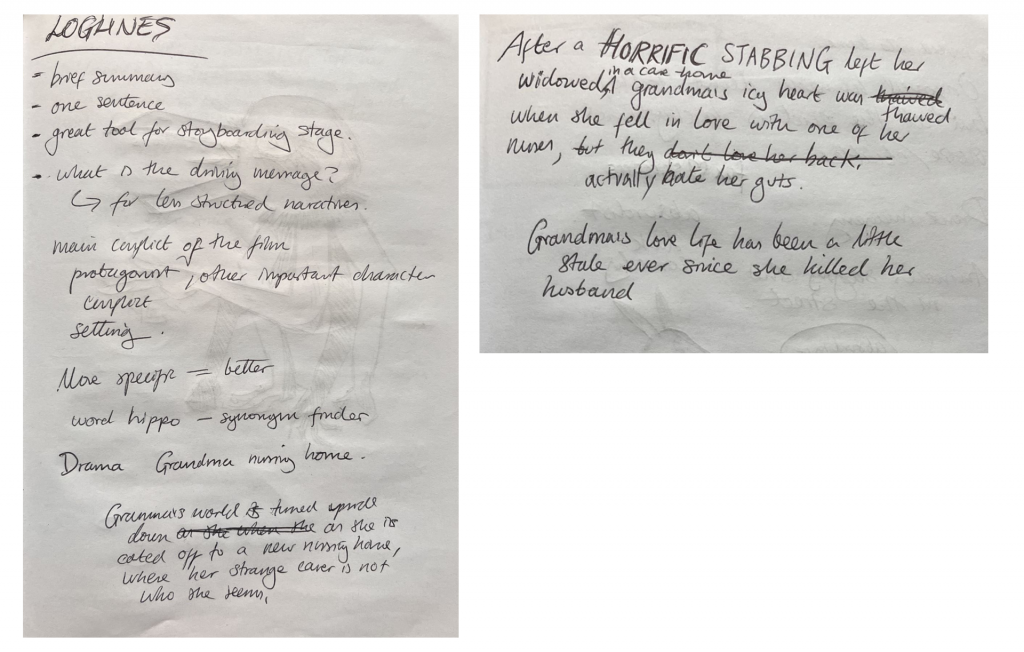
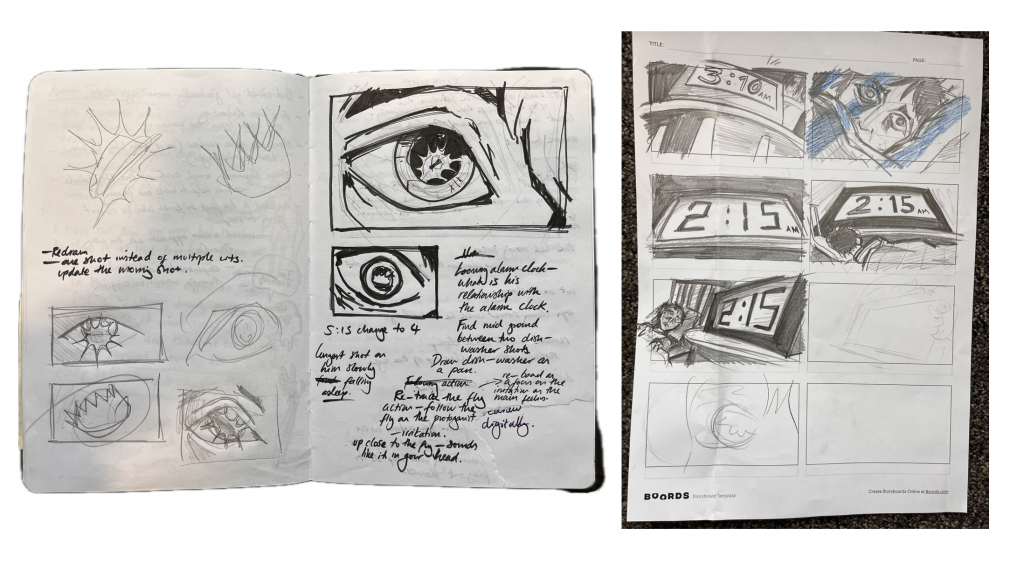
Loglines workshop notes – trying to define our film at this point in one sentence was very difficult because we had not yet drafted the entirety of the story.
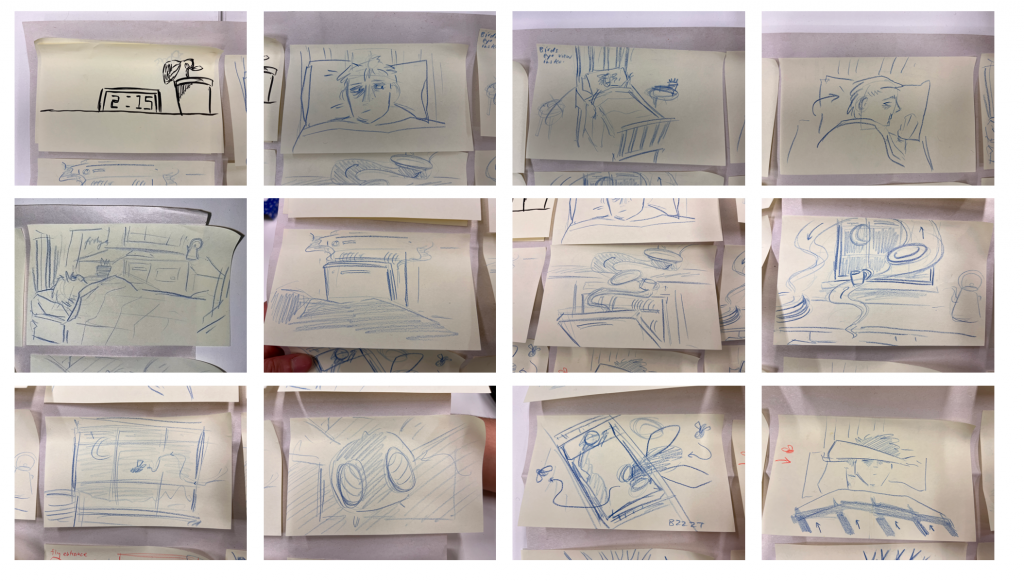
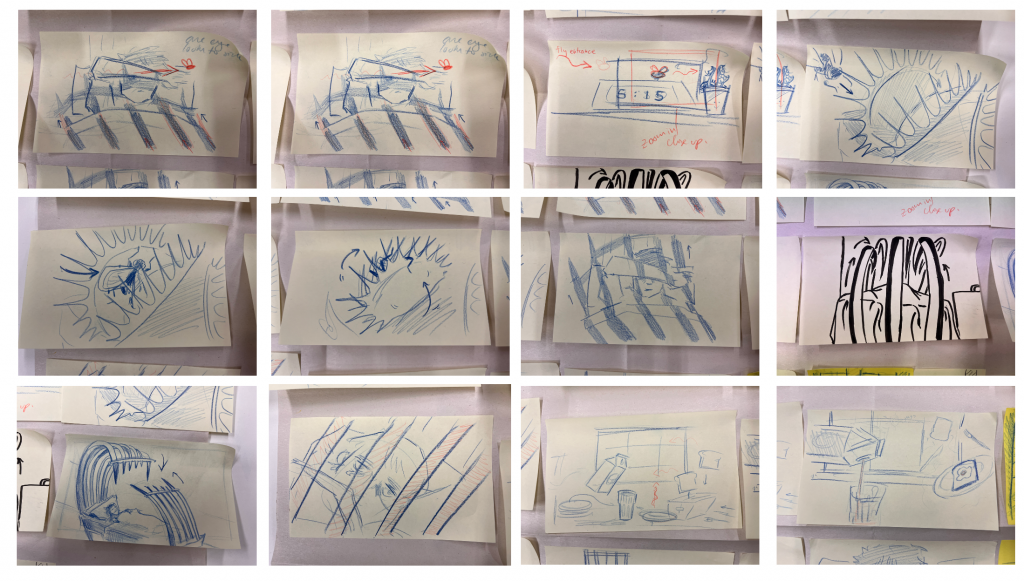
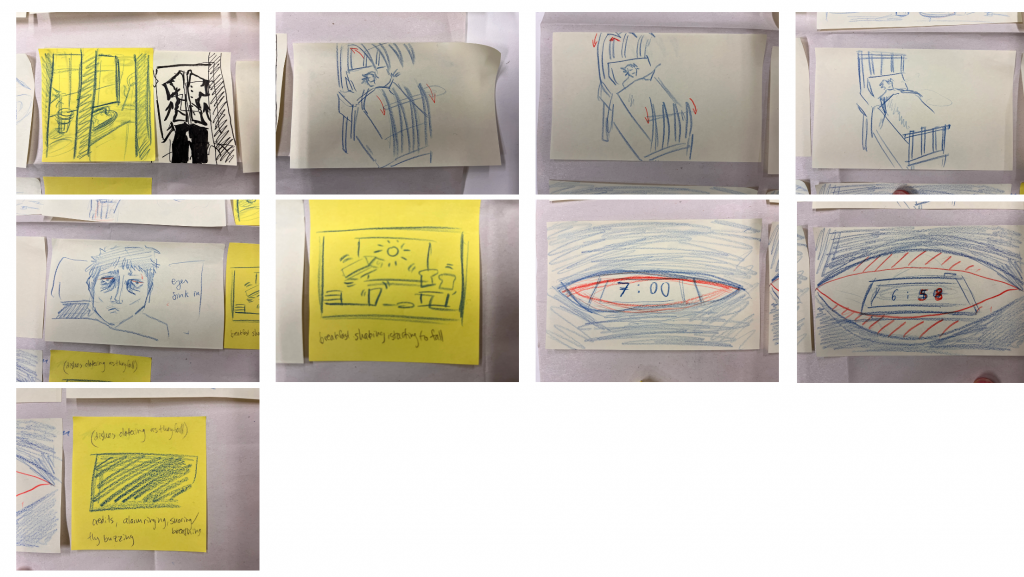
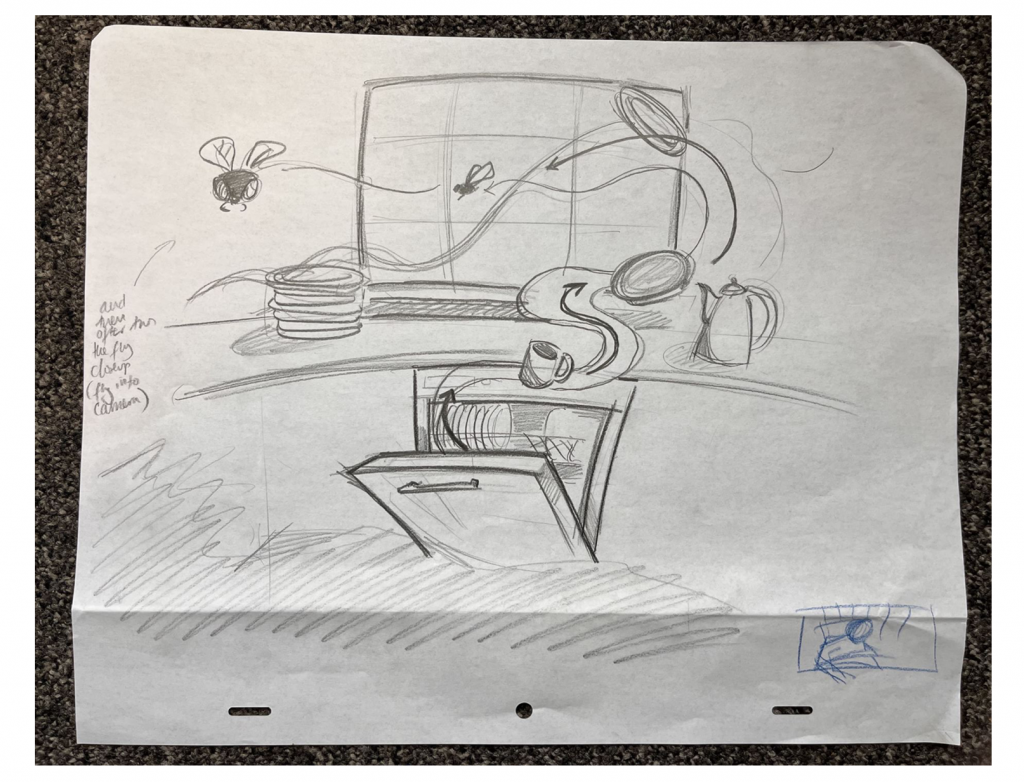
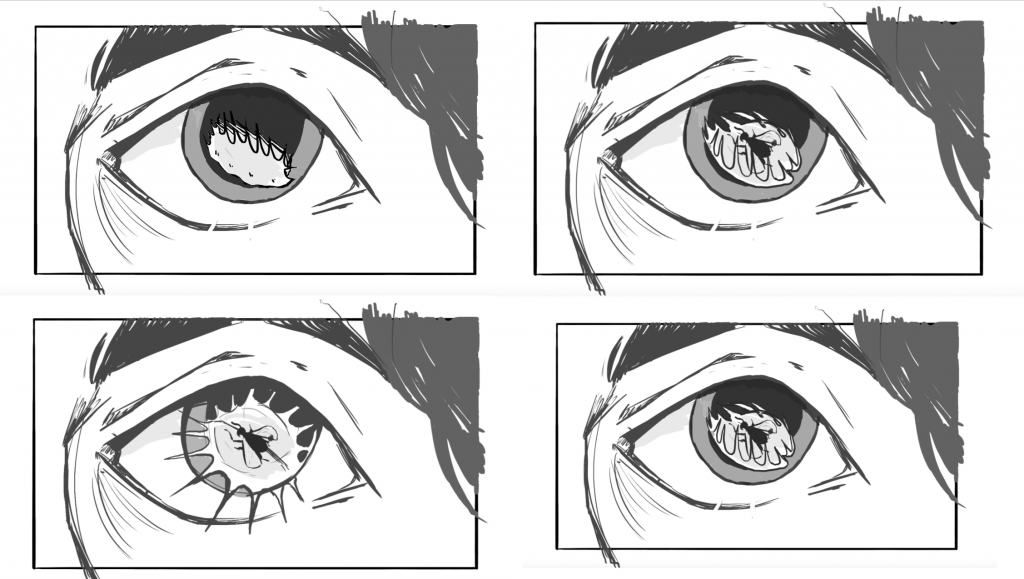
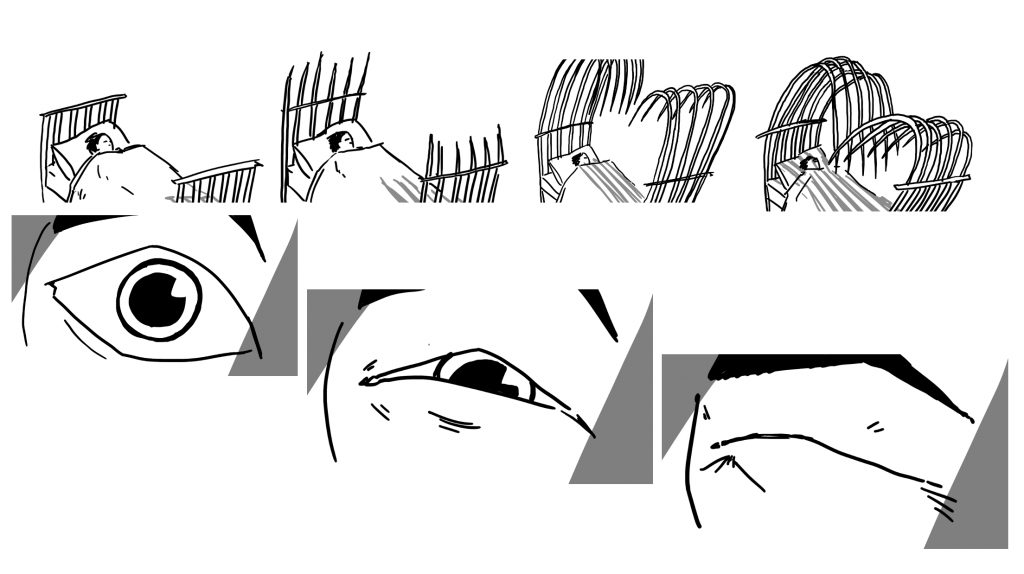
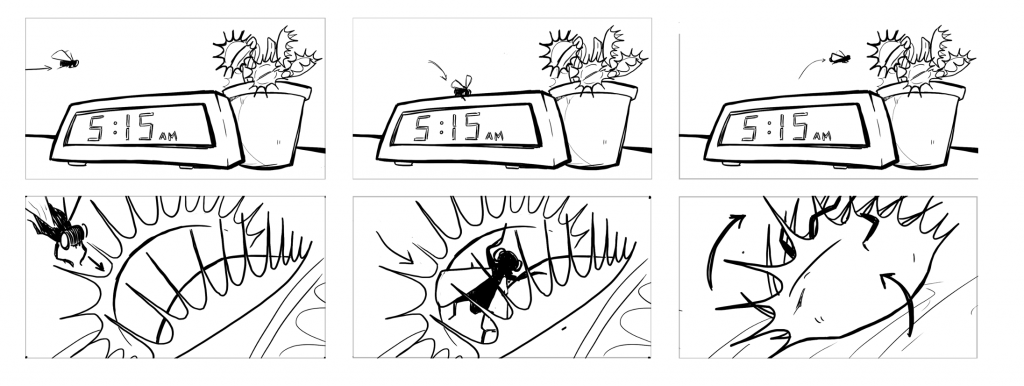
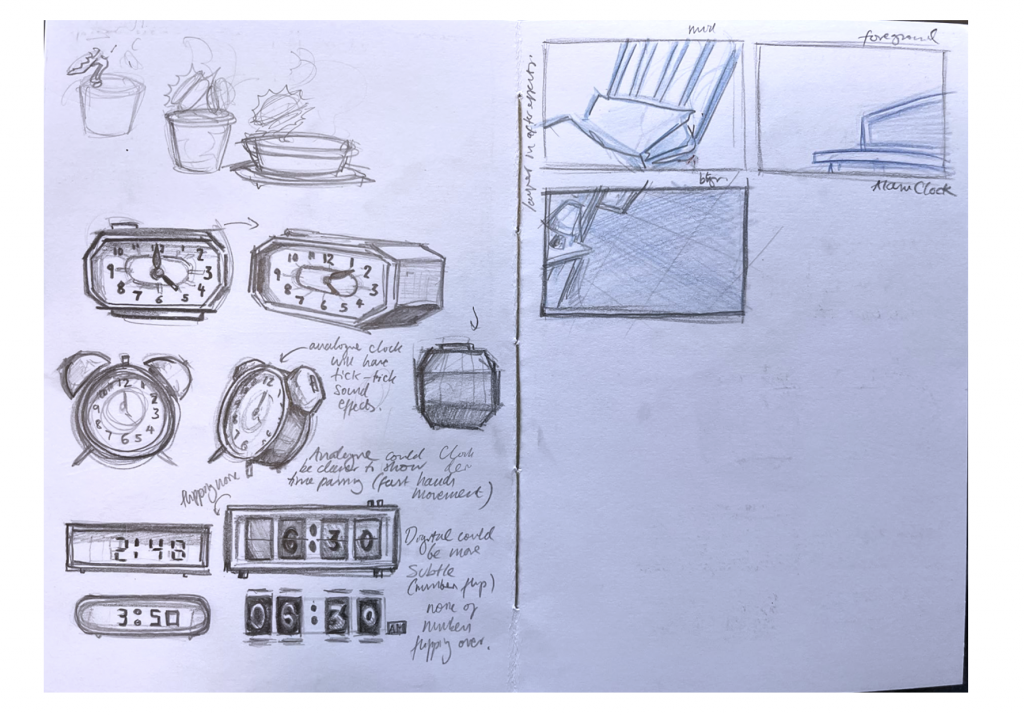
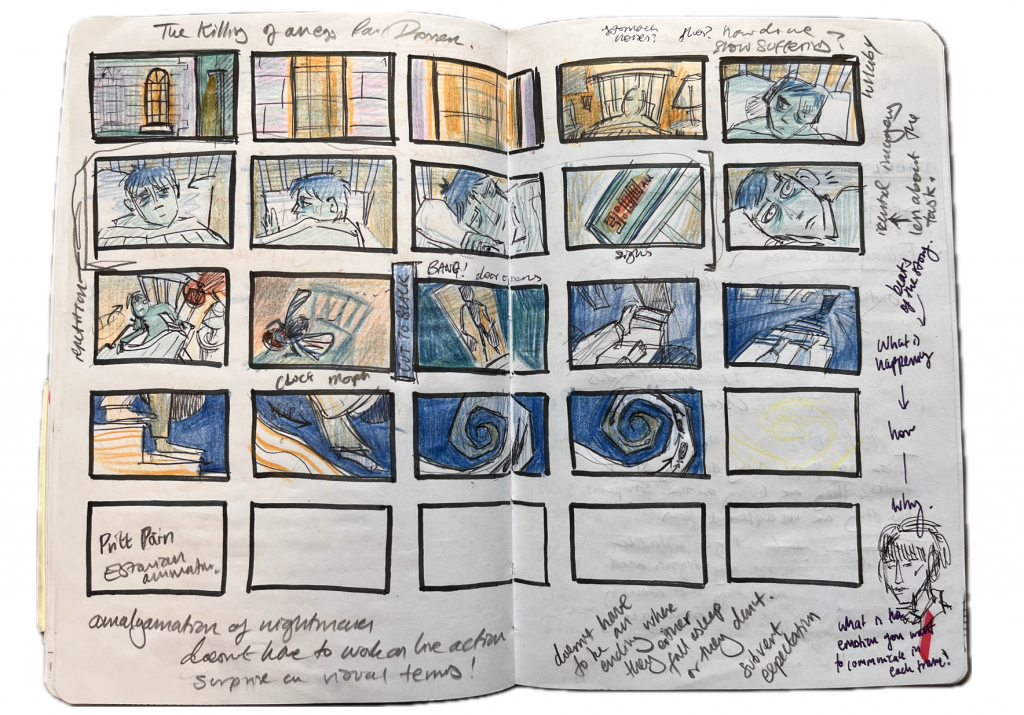
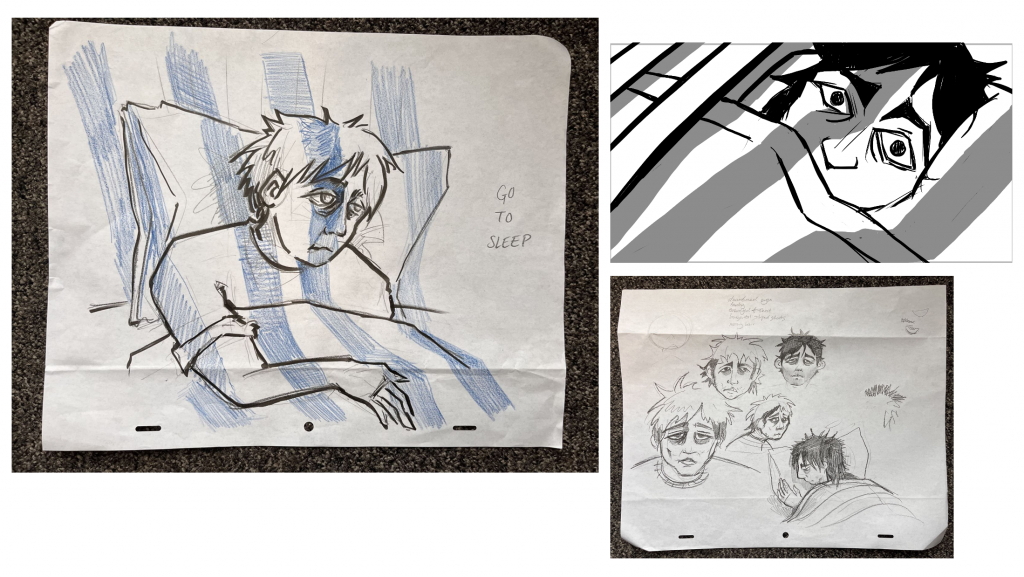
- Our animatic after refinement and multiple rounds of feedback & peer review

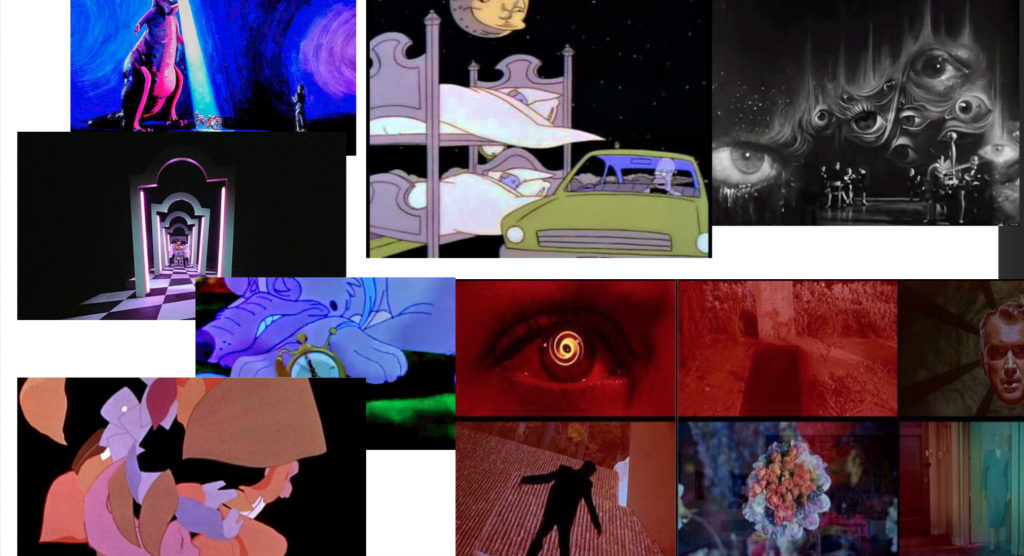
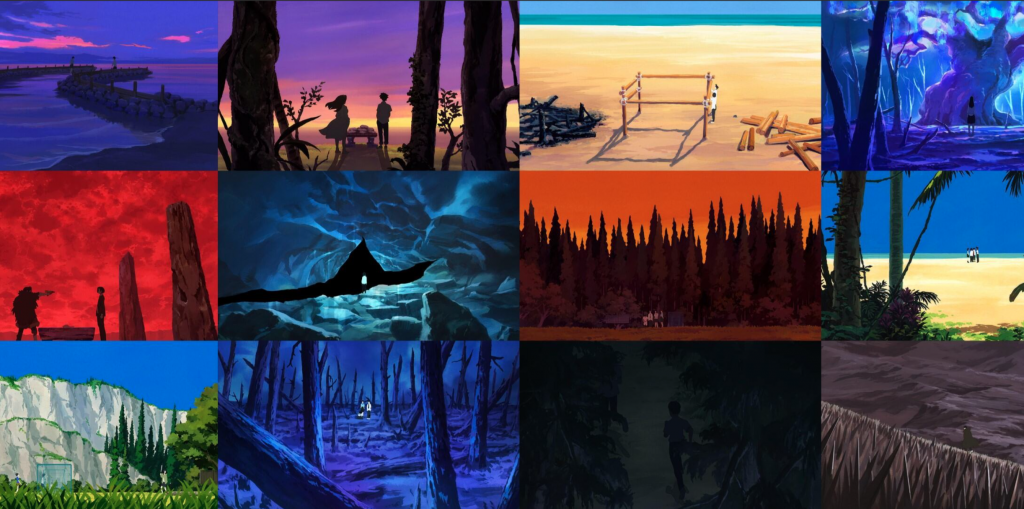
Colour scheme research from dream sequences
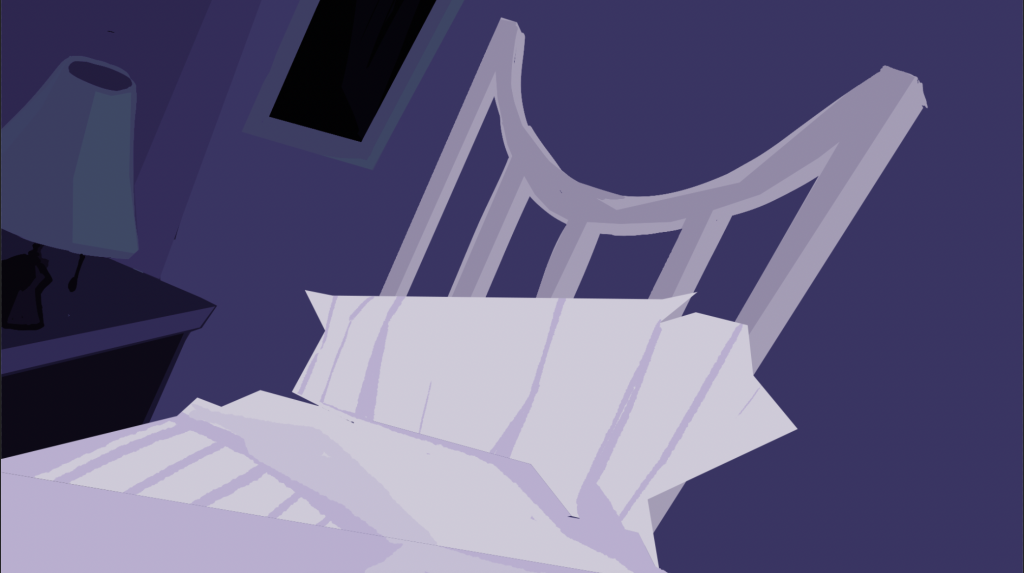
Out Of Your Head Evaluation
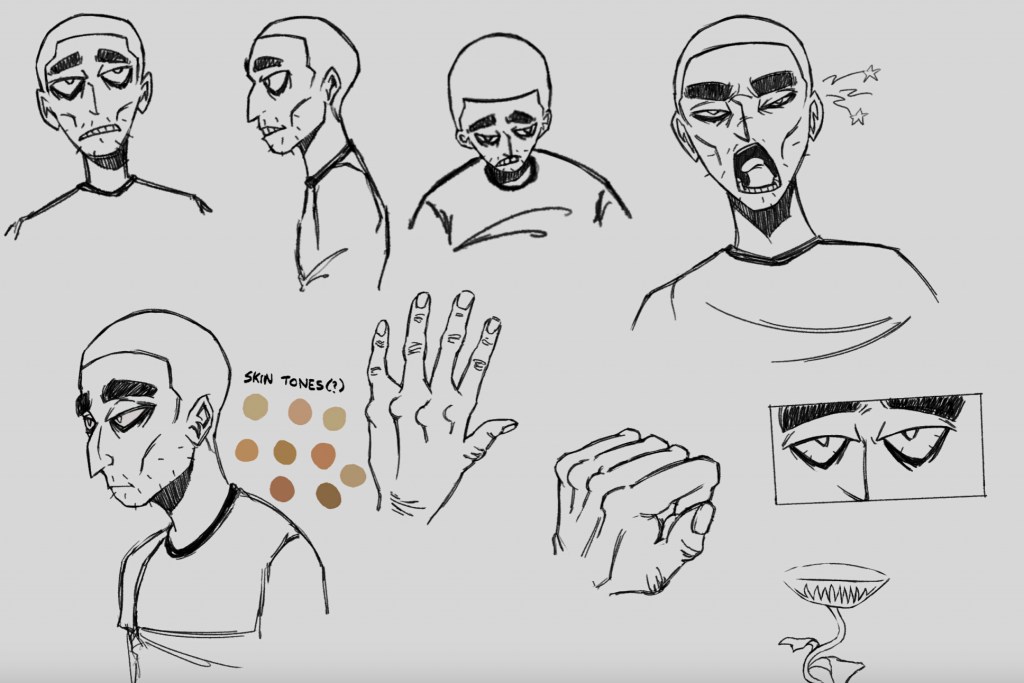
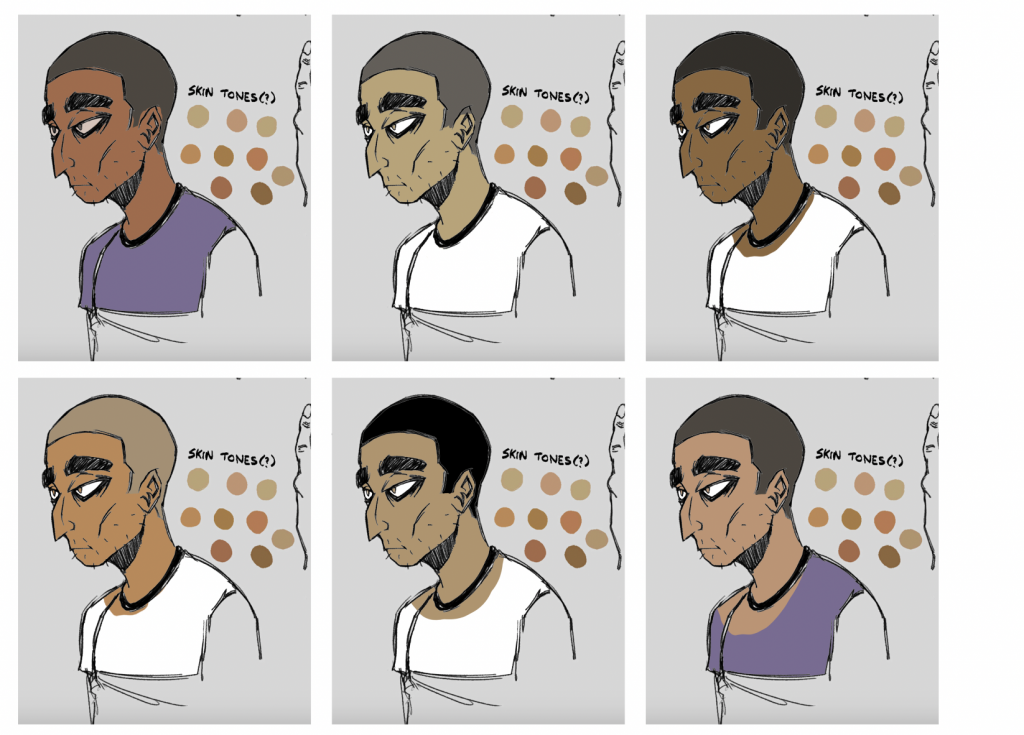
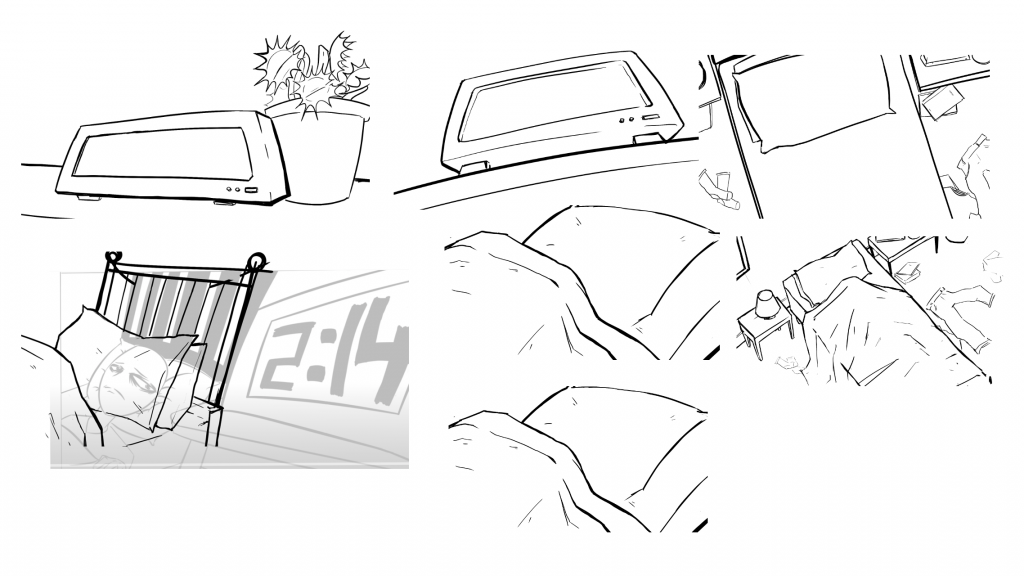
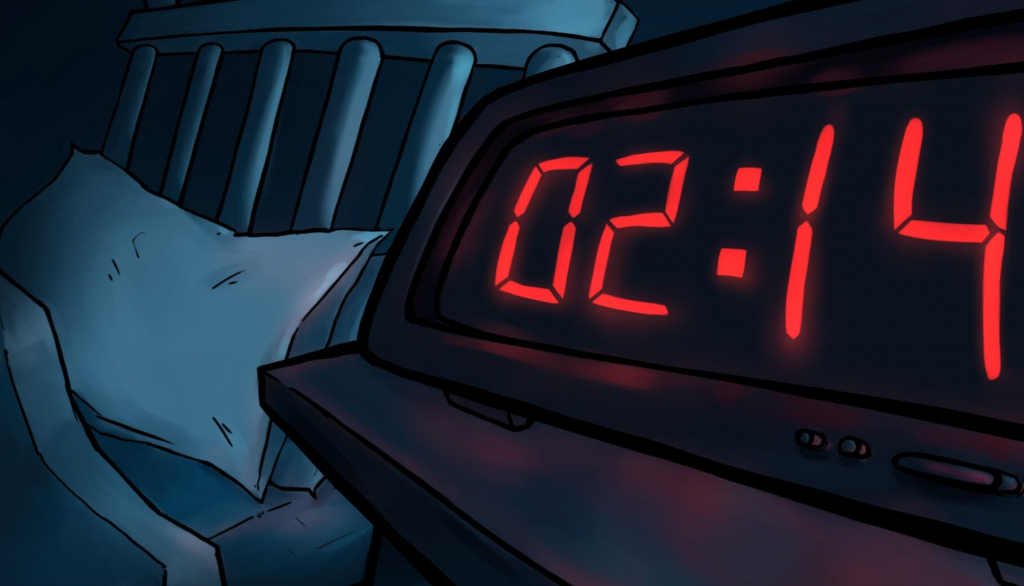
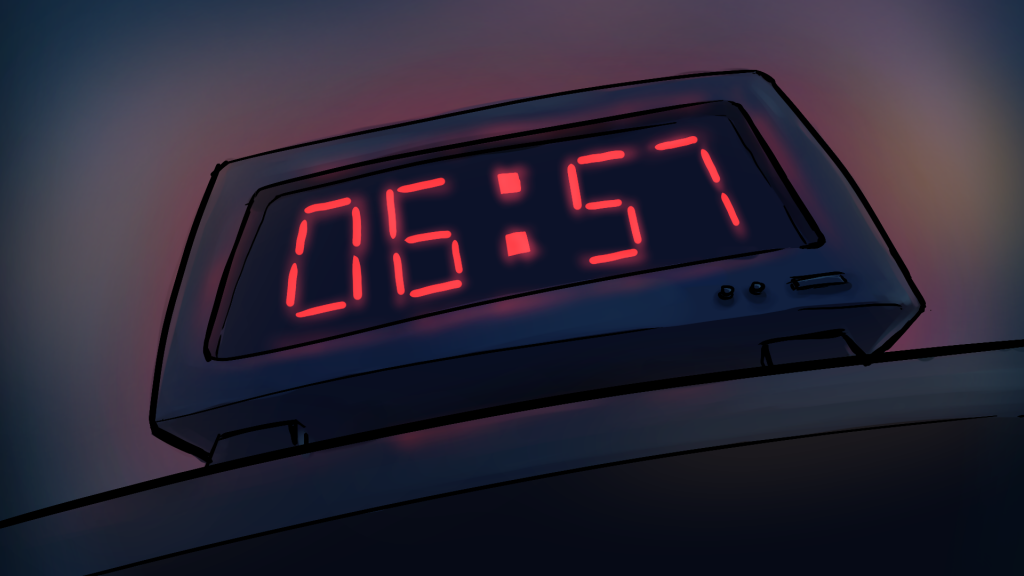
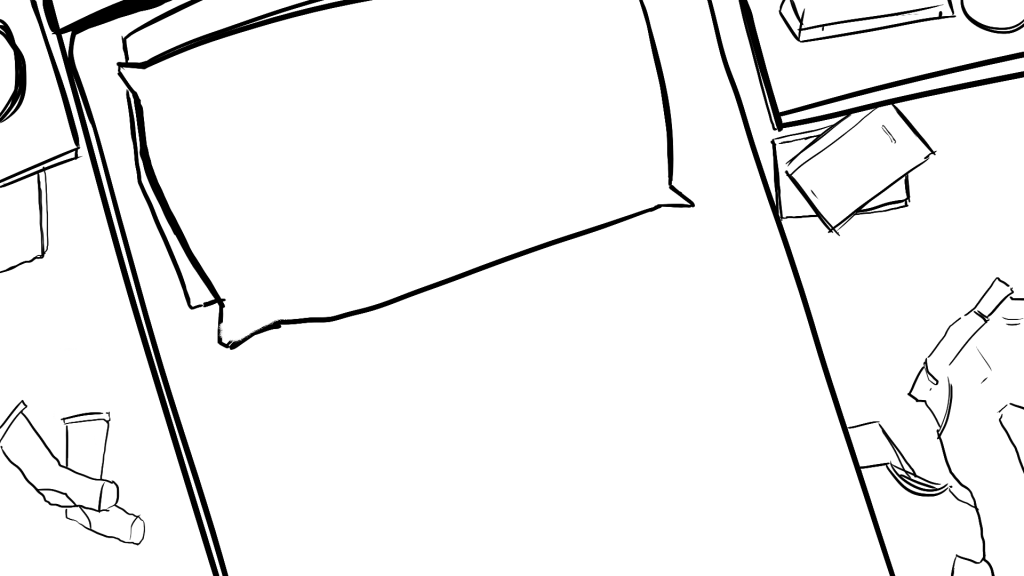
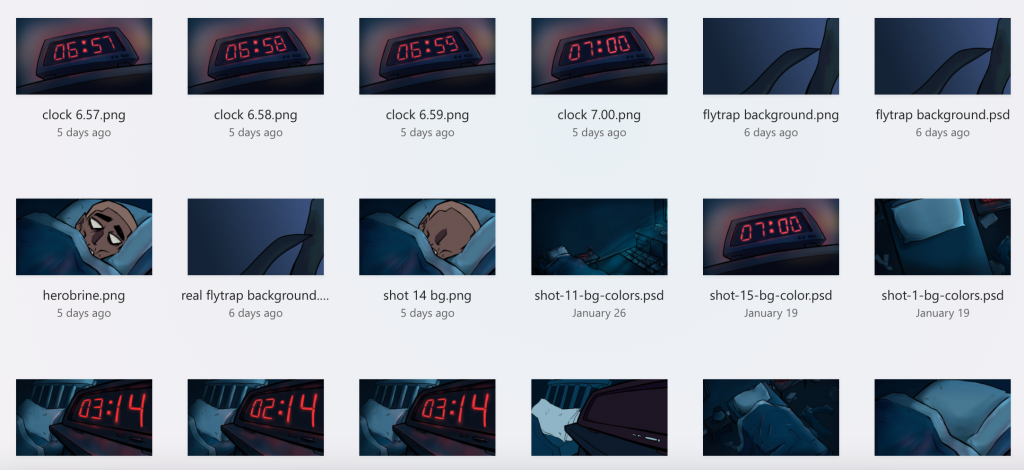
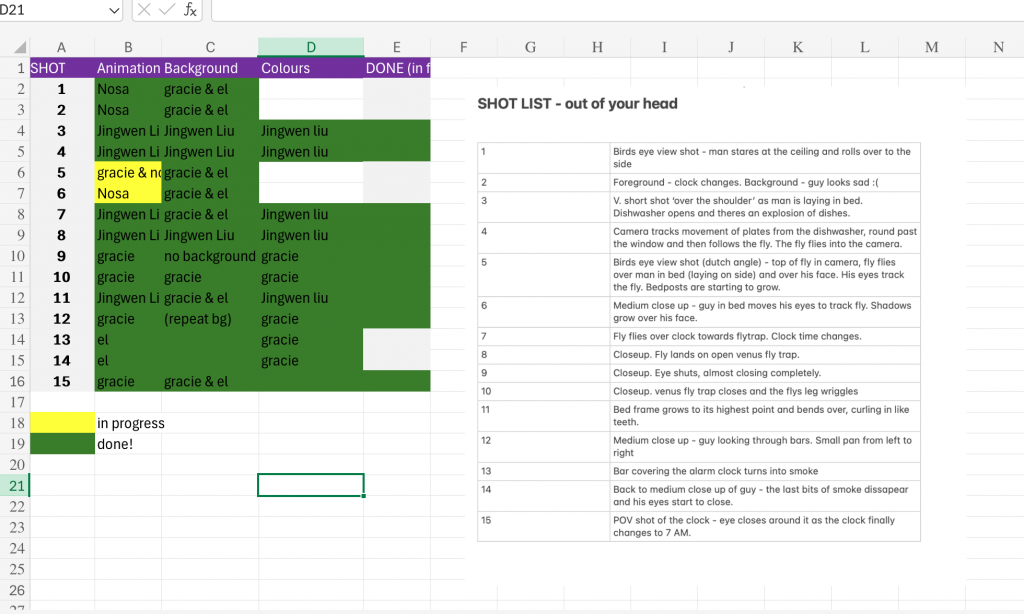
We collaborated efficiently during production and preproduction. To ensure we finished everything we needed on time, I made collaborative spreadsheets and folders where we could update our progress and divide up the roles of roughs, cleanup, colours and backgrounds. Each of us had a different strength which was utilised; Nosa created character design, El painted backgrounds, Jingwen worked on most of the rough animation and I drew backgrounds and drafted storyboards. All of us got involved with the actual animation and animatic, and we often cleaned up each other’s animation and coloured it. When we realised that some shots were taking longer to animate than others because they were more complicated, we switched roles so that some people worked solely on a longer shot, whereas the others would create many of the shorter and less complicated shots.
As a whole, our process was efficient, even though we each have dramatically different drawing styles we were able to all draw in a similar style for this project. This was because the character design sheet was used as a reference, and the backgrounds were all painted and drawn by the same people, for consistency across shots. If we were to improve on our process, I think that we should have used one software for animating, as this would have improved the consistency of line weight and we could have easily edited each other’s animation. We worked across Blender, clip studio paint and Rough Animator, and I took the role of compositing backgrounds and effects in After Effects.
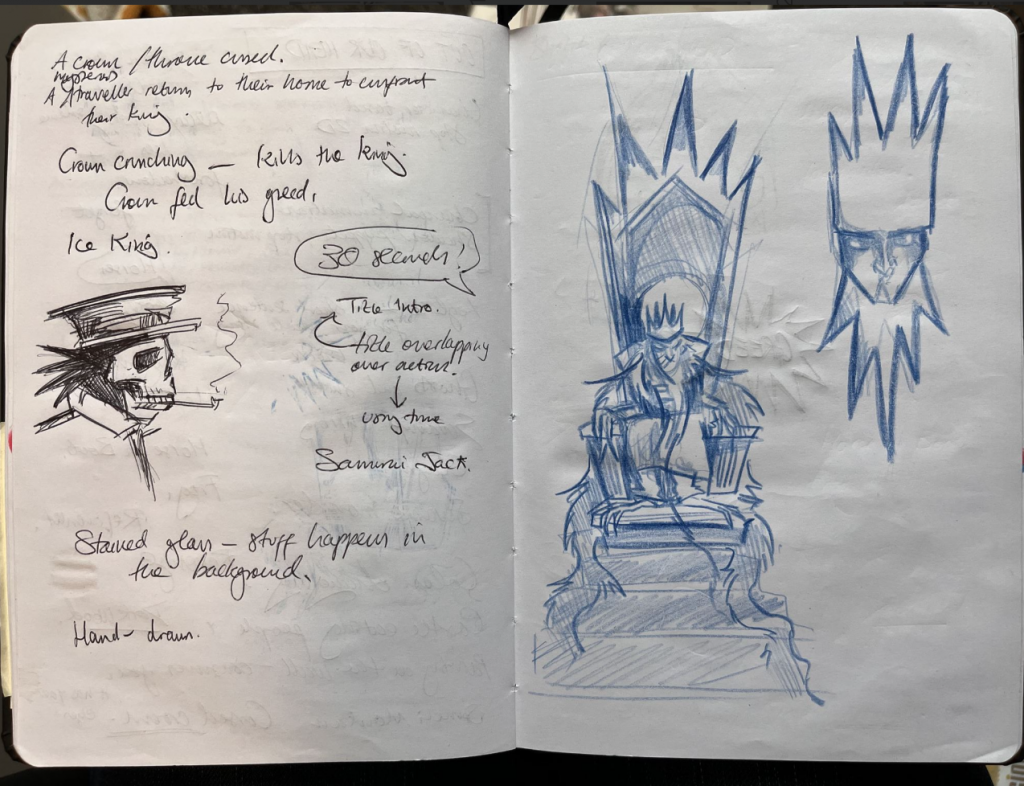
Brainstorming the concept was the most difficult part of the process. Our first draft was a medieval horror and our second was a comedy about animals and the cost of living crisis. We were quite lost at this point and it took a long time to get to a point where we had a story. We ultimately decided to use our own lived experiences for the plot, as most of us had had insomnia. Our first idea had the man trying to complete a task in the middle of the night, but the task became more difficult and absurd as he became sleep-deprived. Another draft had his insomnia emotionally ruining a relationship with his partner, but this became too complicated for the time limit. Overall, I am very happy with the film that we made, as I think that it helps to illustrate the absurdity that comes with sleeplessness and the helplessness that you can feel as a result. Through many drafts of the animatic, we refined the timing, although in some areas we would have liked to draw out the shots so that we would have some room for anticipation within the animation. But I think that for the 30 seconds, we did well to illustrate our concept and I hope that the concept was in some way relatable.